Showing posts with label Author Interview. Show all posts

Friday, 10 March 2017

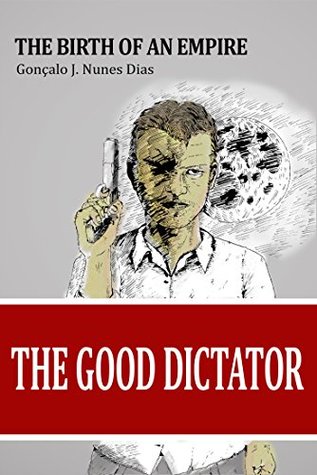
Interview: Gonçalo J. Nunes Dias author of The Good Dictator


33014831


An unidentified object parked on the moon - and no one seems to know where it came from. Gustavo, a middle-aged computer programmer with a comfortable and grey life, decides to make a list of what he would need to survive a hypothetical attack. He becomes obsessed with the list, spends a fortune, robs a drugstore: his own family thinks he is going insane. However, after the attack, it’s the insane who are well prepared for a new era in society. First book of a trilogy.  


Interview


Q: Tell us about the main character, for example, what are his strong aspects and his weakness?
A: Gustavo, the main character, it’s a regular person with a comfortable job, nice house, small kids, but he doesn’t love anymore is wife (Marta). Here’s two excerpts:
“… he had not loved her for some time. He did not think about getting divorced, Marta was a good mother for his sons, they had both gotten a good home, they even had a comfortable life, but he was sure that, but for the children, he would have already filed for divorce.”

“He had committed many mistakes in his life, he had failed in many aspects, but he wanted to be a good father, and the best thing for his kids was to be close to their mother, even if this meant he had to spend the life with someone so futile like Marta.”


Gustavo is a competitive person, even with their friends:
“Everybody turned to Gustavo waiting for a serious answer, without jokes, everybody knew he was calculating, practical and very logical. Gustavo, in turn, was sometimes rather competitive and knew that if he exposed his theory, they would want to do the same and this could lower his percentages of survival. At this very moment, he hated himself for thinking in such a selfish and competitive way with his old friends and that he probably would not see them again.”


When the object parked on the moon, he got obsessed with the list:
“The creation of the list had brought some adrenaline to his life, some hope in something new, in some sort of change. And now, there he was in one of his favorite places and he was thinking that he had failed, that the poor emotion he had for life had led him to the exaggeration of spending too much money, putting at risk his working place, and even worse, putting in risk his freedom after an unnecessary robbery.

While he was immersed in these thoughts, he saw his father open the old gated of the property and approach him. Gustavo sighed and thought that he would now have to hear his old father give him a moral lesson about life; accept your mistakes and don't fly into paranoia or exaggerations. That was exactly what he did not want right now, he had come to that place to be alone and now he would hear his father in a speech about common sense.”


Gustavo’s strongest aspects are probably his faster adaptable to a new situation, and he is a planner:
“Gustavo laughed again, he looked down with an amused look and saw the great hate that emanated from The Fatty.
- Do you know why it came down to this? You on your knees and me standing and observing your village in flames? Because you’re the weakest link. You know, you fatty, in the animal world, the ones who adapt the better to the environmental conditions are the ones who survive, and just between you and me, we both have the best example of it. You, who still think you are the GNR commander and that someone will come from the past to make me pay for my deeds. While I have quickly adapted to the new reality: as soon as the craft landed on The Moon, I made a list of indispensable things, I spent a lot of money in this list, I robbed a drugstore and was considered to be crazy by my family, but when the attack occurred, this crazy one was the one who had adapted the best to the new environment. And, let me tell you: I longed for this attack; I was fed up with living my comfortable and gray life behind a computer.”


Gustavo’s weakness it’s probably his inability to improvise:
“Gustavo remained quiet, feeling uncomfortable that Ramiro was better prepared than he was. He would've liked to have had a few minutes to think about some excuses, but he remained still, with no excuses, awaiting another wave of accusations and with some fear of what would come. Ramiro continued:”


Q: The novel it’s a dystopian or an utopian?
A: I think dystopian and utopian came along, and depends on the perspective of the reader. When the book was released in the Portuguese market, some said: it’s a post-apocalyptic novel, others a dystopian and either another’s claims it was a utopian. For Gustavo and his friends are a utopian, because they try to build a better society. Gustavo speaking:

“- I don’t do this for the power, Ramiro, I do this for our children, so that the future generation doesn't have to live in an unequal, corrupt and unprincipled society. I don’t want to be in power forever, I’m in favor of creating a law that one will only be able to be in public positions no more than eight years; after which, no privileges or special treatment are reward so that they have to go back to their work. Politics will be seen as a contribution to society and not as an opportunity to get rich and find well-paid state jobs for your friends. I do this so that your daughters and my children only hear about Swiss banks, tax havens and stock exchanges, like Wall Street, as things of a dark and greedy past from a lost society. I won’t allow you and your friends to change my view of the future.”

Elien

Thursday, 29 December 2016

Author Interview: Fred Holmes author of The Ugly Teapot

29749200Title: The Ugly Tea Pot
Author: Fred Holmes
Genre: Fantasy, Adeventure, Middle Grade/Young Adult
Publication date: March 30th 2016
Pages: 205 (kindle)
Buy links: Amazon


Fourteen-year-old Hannah Bradbury loved her father so much that she worried about him constantly. After all, he was a photographer who traveled to the most dangerous places in the world. 

To allay her fears, each time he came home he brought her silly gifts, each one with supposed magical powers: the Seal of Solomon, the Ring of Gyges, even Alladin's Lamp. It was that lamp Hannah found the most unbelievable, for it looked like an ugly teapot. Nevertheless, her father assured her it was real, and made her promise to save her three wishes for something special.

Then.... six months later.... the unthinkable happened. Her father was killed while on assignment to Baghdad. And so on the day of his funeral Hannah did something she never thought she would ever do. 

She took out that teapot and gave it a rub...

The Ugly Teapot by Fred Holmes is a timeless tale, filled with magic and adventure. More importantly, it will make you believe in the overwhelming power of love.


About the author


The Ugly Teapot is Fred Holmes's first fiction novel, having previously ghost written nonfiction book, Letters From Dad, published by Thomas Nelson. He is known primarily as a writer and director of films and television, working primarily in family films an children's television. His work can be seen on Mary Lou Retton's Flip Flop Shop, Barney & Friends, Wishbone, Horseland, In Search of The Heroes, and many other shows, for which he has won two Emmys and three CINE Golden Eagles, among numerous other shows. He has also directed three feature films including Dakota, starring Lou Diamond Phillips, distributed by Miramax, and Heart Land, a Bollywood film shot on location in India. He lives with his wife and son in the southwest United States, and can be found online at www.fholmes.com


Interview 


Q: How did you come up with the idea for your book?
A: THE UGLY TEAPOT began as a screenplay called FIREFLIES that I wrote in response to the death of my brother. He died very young from cancer, and it took seven years to kill him because he tried so hard to live. I was with him through it all and it was awful. After he died, I was struggling with a lot of emotions that I was finally able to vent in FIREFLIES; and eventually FIREFLIES became THE UGLY TEAPOT.


Q: Whose work inspires you?
A: I have so many favorite authors it would be impossible to name them all. I will say that I’m a huge fan of Neil Gaiman, Patrick Rothfuss, George R. R. Martin, J K Rowling, Stephen King, Ken Follet, Orson Scott Card, Stephanie Meyer, Terry Pratchett, and a little known, very obscure writer named Fred Holmes. Yes, it is perfectly fine, in my opinion, to like your own writing. If you don’t believe in yourself, no one else will. But perhaps my favorite author of all is Ray Bradbury. He wrote my favorite novel of all time, DANDELION WINE. Why I connect with that book so viscerally, I have no idea, because it is about a time in which I did not live, and a place I’ve never been, and yet I absolutely adore it. A big reason why is Ray’s use of language. His writing is about as close to poetry as one can get. As a side note: Years ago, before Ray died, he was working with my friend, Jerry Molen, on the movie version of THE MARTIAN CHRONOCLES for Universal. Jerry was telling me about working with Ray, and I told Jerry what a huge fan I was of DANDELION WINE. Sure enough, the next day when I showed up in Jerry’s office at DreamWorks, he handed me an autographed copy of DANDELION WINE. And on the inside of the cover, Ray had drawn a picture of a dandelion and written, “Fred, this dandelion is for you!” It remains one of my most prized possessions.


Q: You have a day job as a screenwriter, how different is it from writing a book?
A: Very different in a lot of ways. In screenplays you only write down what the audience will see and hear. Actors do not like you giving a lot of screen direction in terms of how they should be feeling or behaving, and directors don’t want you telling them how to block the action. Consequently, a well-written screenplay is simply a blueprint for how the movie should be constructed; and at its best simply conveys emotion. In a novel you are given more leeway. You can get inside the characters’ minds and portray their thoughts and emotions; so it’s much easier to build well-rounded characters. Also, screenplays have their own unique structure, use as few words as possible, and are meant to be shot, not read. Novels, on the other hand, have a stronger emphasis on good grammar, etc. But what is true in both mediums is that the screenwriter and the novelist both must be able to write dialog.


Q: The Ugly Teapot was originally a screenplay, how did it turn into a novel?
A: As I meantioned earlier, THE UGLY TEAPOT began life as a screenplay called FIREFLIES. My agent shopped FIREFLIES all over Hollywood and it was optioned numerous times by several high profile producers. One of those producers was Jerry Molen, who had won the Academy Award for producing SCHINDLER’S LIST (with Spielberg and Branko Lustig). Jerry loved FIREFLIES, but for a lot of frustrating reasons he was never able to get it made. Then one day a friend of mine at Disney read it, loved it, and suggested I turn it into a novel. I’d always wanted to try my hand at writing a novel, so I turned FIREFLIES into THE UGLY TEAPOT and sent it out into the cold, cruel world. Hopefully it will bring solace to those like myself who have gone through something traumatic in their lives.


Q: Which scene in the book was the most fun to write?
A: The opening scene was the most fun to write because it set everything up. It also took the longest time to write. I have no idea how many times I rewrote it, including just before the book was published—which drove my editor crazy!


Q: How would you describe The Ugly Teapot in three words?
A: Love conquers all.


Q: Could you tell us one silly fact about yourself?
A: I’ve always wanted to be an astronaut. I even applied to the program, but they told me they didn’t take short, fat, ugly people. Just kidding! They were very nice. I just didn’t have the requisite flying experience or a background in science. However, I made up for it by directing a lot of films for NASA and got to know a bunch of astronauts like Sally Ride, Charlie Duke, Gordo Cooper, Neil Armstrong, Buzz Aldrin, Ken Reightler, and John Glenn. I got to shoot inside one of the Space Shuttles and got to attend two launches.


Q: If you had to choose between being a fulltime novelist or a screenwriter what would it be?
A: I would be a novelist. For two reasons: one, I’ve been writing screenplays for a long time and I relish trying something new; and two, I love the freedom that comes with writing a novel. You can delve more deeply into character, etc.

Q: Why should everybody read The Ugly Teapot?
A: Why should anyone read any story? First, a good story teaches you empathy. You get to walk in someone else’s shoes for awhile. Second, a good story broadens your horizons. You learn that it’s a great big world out there with diverse ways of living and thinking, and learning about this diversity makes you a better, more well-rounded human being. And third, a good story teaches you to dream. It makes you realize you can accomplish so much more than you ever thought you could. Does THE UGLY TEAPOT embody all of these objectives? I sure hope so. I tried my best to portray them. And I would be honored if folks would give it a chance.


Q: Is there anything you would like to tell your readers?
A: I’m currently working on the sequel to THE UGLY TEAPOT, and I hope you’ll come along for the ride. Aladdin’s Lamp has taken up residence in a small village nestled in the Great Smokey Mountains of Tennessee, and the townspeople there will never be the same. Some of them will live, some will die, and some will...well...you’ll just have to read it to find out!

Thank you so much Fred!

Elien

Thursday, 17 March 2016

Author Interview: Bob Goddard from Mother Moon


28094622Title: Mother Moon
Author: Bob Goddard
Genre: Sci-Fi, Adult
Publisher: Timbuktu Publishing
Publication date: December 2nd 2015
Pages: 390 (Kindle)


2087 - A colony of scientists is stranded on the Moon as the Earth faces imminent disaster

1504 - A wooden sailing ship is navigating the dangerous waters of religious fundamentalism

Two events separated by space and time, yet destined to collide in a simple twist of fate. 

When a comet changes course and heads for Earth, the finger of blame is pointed at one country. The entire planet is thrown into chaos, while on the Moon a colony of scientists faces the bleak prospect of being stranded... forever. 

Will Cooper and Nadia Sokolova become unlikely allies in their struggle for survival. Can they make Armstrong Base self-sufficient before the food runs out? Will they ever see their families again? Can love conquer fear in one-sixth gravity?

And what does a 16th century sailing ship and its grizzled captain have to do with their plight? Can he stay alive long enough to uncover the origins of all humans on Earth? Is this the end of Man... or the rebirth of Mankind?

Only Mother Moon has the answers...


Interview


Q: Can you tell us a bit more about the storyline?

A: When a comet changes course and heads for Earth, the finger of blame is pointed at one country. The entire planet is thrown into chaos, while on the Moon a colony of scientists faces the bleak prospect of being stranded... forever.
Will Cooper and Nadia Sokolova become unlikely allies in their struggle for survival. Can they make Armstrong Base self-sufficient before the food runs out? Will they ever see their families again? Can love conquer fear in one-sixth gravity?
And what does a 16th century sailing ship and its grizzled sea captain have to do with their plight? Can he stay alive long enough to uncover the origins of all humans on Earth? Is this the end of Man… or the rebirth of Mankind?
Only Mother Moon has the answers...


Q: How did you come up with the idea for your book?

A: I’ve always been interested in space travel, but this was sparked by a UK radio presenter who said: “Perhaps we should all go and live on the Moon!” It was a meant to be a flippant comment in response to global warming predictions, but I thought, “Yeah… why not?”


Q: Whose work inspires you?

A: Many great authors, from Sebastian Faulks (Birdsong was stunning) to Bill Bryson, for his wit and whimsy. But I’m currently on my third David Mitchell book, having been swept away by Cloud Atlas. I love his writing style and imagination.


Q: Which scene in the book was the most fun to write?

A: The suicide scene out on the desolate Moon surface. Will Cooper is in a race against time to save Lian Song as her suit leaks its precious air from a self-inflicted puncture, and save himself too, as his oxygen runs out. I was gasping
for breath while writing it and still get sweaty palms when I think about that scene.


Q: How would you describe Mother Moon in three words?

A: Epic space drama


Q: Could you tell us one silly fact about yourself?

A: I do most of my writing in my dressing gown! Early morning is my most productive time so the world has to wait until my words run dry.


Q: Why should everybody read Mother Moon?

A: Because the future of Mankind depends on it! And because it is a deeply human story about tragic loss, unlikely love and, ultimately, survival.


Q: What are the words you live by?

A: Be yourself, always. Life’s too short to act out a play for the benefit of others.


Q: Do you already have another book you are working on?

A: Yes, a sequel to Mother Moon. Working title is, inevitably, Mother Earth. It features some of the same characters, but with a whole new set of life-threatening challenges for them to overcome.


Q: Is there anything you would like to tell your readers?

A: I spent nine years – part-time, admittedly – on research. Then four years writing and editing. So I’m fairly confident the science is right and the characters’ backgrounds are solid. Once the idea of the twin-timeline story had taken root, I was committed. So I ended up writing this epic story with some important messages for humanity woven in between the lines. I’m delighted that non sci-fi readers are enjoying it, as well as space buffs. I like to think there is something in Mother Moon for everyone.

Thank you so much Bob!


Elien

Thursday, 10 September 2015

Review + Interview + Giveaway: Gaia (Wings of War #2) by Karen Ann Hopkins


25086524
Title: Gaia
Author: Karen Ann Hopkins
Series: Wings of War
Genre: Young Adult, Fantasy, Paranormal
Publication date: July 26th 2015
Pages: 294 (paperback)
Source: Received from author (Thank you!!)
Buy links: Amazon


Watchers and Angels are at war. Which side will Ember choose?

Humankind is on the precipice of the apocalypse.

As the Demons grow bolder and the walls between the planes of existence weaken, Ember is forced to develop her powers as quickly as possible, and she seeks out a powerful earth Watcher to continue her supernatural lessons. Her glimpse of the future demands she fight the dark forces spreading across the earth.

But her new mentor has his own agenda, making her question everyone and everything she ever trusted.

When Ember is thrust into the world of the Watchers, she learns of their plans - ones that defy the scripture and make them enemies of the Celestial Host. Ridding the world of evil gets complicated when it becomes impossible to take sides.

As Ember struggles with morality, she soon discovers that there's something more frightening than anything she's faced before.

Goodreads

Ember ended with a huge climax. So much happened near the ending that my head was about to explode. All this time I have been pretty excited to get my hands on the sequel. It had been a while since I read Embers so I forgot some of the details but since Gaia started right after Embers ended the details came back to me and it was easy to fall back into the world of the Wings of War series.

This series by Karen Ann Hopkins is truly amazing. By now I know that she is an excellent writer but still her books keep blowing me away. It is so easy to get sucked into the world and atmosphere she creates in her books. If you thought that there was already a lot happening in Embers than you are up for a really nice treat because so much happened in Gaia. There was almost no time to catch your breath so many things happened. Were Embers focused a lot on romance, Gaia focused a lot more on the action parts. And I loved it!

Ember was still as amazing as in the first book. She is so fierce, smart and strong. Her determination to do the right thing no matter what the cost is really admiring. It is easy to identify yourself with her because she also has her faults and her weaknesses. She is just a human being like us even though she is not really human. Ember grew a lot in the first book, she learned about her powers and her true identity. In the second book she keeps growing as a character. She tackles the obstacles that are thrown at her with ease and she learns how to control herself and her powers. I loved seeing how she got more confident with herself and her powers.
Swayer the other main character of this book was still the same as in the first book. He is still a bit of a mystery to me. There are still so many things we have to learn about him and his past. And I cannot wait to find out more things about him. I had the feeling that he did not grow a lot in this book. Mostly he was just there for Ember whenever she needed him. So I hope to see more of him in the next book.


The Watcher history is really interesting and I loved learning more about it. The war between the factions, there animosity with the angels…. Everything is just so intriguing. Overall I really liked the book. It was fast paced and it kept me on the edge of my seat the entire time. I would highly recommend this series to any fans of paranormal fiction. And to the ones who love to read fantasy books. The ending of this book like the previous one was great and I cannot wait till the next book in this series comes out!


Interview

Q: Both your other series are contemporary books set in an Amish culture. What made you decide to venture into the paranormal genre?

A: I love writing Amish fiction, but after I’d finished the Temptation series and book one of my Amish mystery series, Serenity’s Plain Secrets, I needed a short break from the Plain culture. Embers had been a daydream of mine for many years, long before I began writing Temptation. Fantasy and paranormal had always been my favorite genres, so I took and chance and created the Wings of War series.


Q: In Embers there were some epic battles between good and evil. Can we expect those again in Gaia?

A: Oh yes, and on a much grander scale! Gaia is a roller coaster ride from start to finish. I also got to add a few scenes in an Amish community, which I think my Amish readers will enjoy very much.


Q: There are a lot of YA books about angels and demons out there. How does your series stand out against all the others?

A: Honestly, I haven’t read any others, so I can’t really compare. It’s the same with my Amish books. I try not to read books in the same genre in fear of corrupting my own ideas and plot development. But I can say that the Wings of War series is epic in scope. I worked hard to create a world that the reader would believe in, even the supernatural aspects. I also did a lot of biblical research on the rapture and angels in general. I infused legend, lore and historical references into the books, along with scripture verses from the bible.


Q: A lot of things happened to Ember and the people she cares about at the end of Embers. How will she deal with all that in Gaia?
A: Ember is a touch cookie, a true survivor. She deals with her actions, justifying them in her mind as just and unavoidable, but they’re always with her, making her question her own goodness deep down. Gaia is an action filled segment of the series and Ember doesn’t have a lot of time to worry about the consequences of her choices.


Q: Ember’s and Sawyer’s relationship is not exactly easy. How would you describe their relationship in five words?

A: Passionate, loyal, honest, frightening, hopeful.


Q: How many books can we expect in this series?
A: I’m planning five books in the Wings of War series. The first four books will focus on Ember learning a new element; fire, earth, water and air. The fifth book will be a culmination of all the books and the conclusion to the series, when Ember and her friends face the apocalypse. The next book in the series is TEMPTEST. It will be available late spring 2016.


Q: Is there anything you would like to tell your readers?

A: Thank you for being a part of Gaia’s blog tour! I love to connect with readers on my Facebook page, Twitter, Instagram or at www.karenannhopkins.com. Please be on the lookout for the release of SECRETS IN THE GRAVE, the third installment in my mystery series, Serenity’s Plain Secrets, in early September! Thanks for reading!


Karen Ann Hopkins

Giveaway

One lucky winner will receive a $50 gift card (Amazon, B&N, iTunes), as well as a complete set of Karen's YA books, including Embers, Gaia, Temptation, Belonging, Forever, and Rachel's Deception! Please enter via the Rafflecopter form. Giveaway is open internationally.


a Rafflecopter giveaway

About the author

Karen Ann Hopkins resides in northern Kentucky with her family on a farm that boasts a menagerie of horses, goats, peacocks, chickens , ducks, rabbits, dogs and cats. Karen's main job is home schooling the kids, but she finds time to give riding lessons, coach a youth equestrian drill team, and of course, write. She was inspired to create her fist book, Temptation, by the Amish community she lived in. The experiential knowledge she gained through her interactions with her neighbors drove her to create the story of the star-crossed lovers, Rose and Noah. 

Karen grew up about a mile from Lake Ontario in Upstate New York. She was bitten by the horse but at the age of five, and after diligently taking riding lessons for several years, was rewarded with her fist horse when she turned eleven. The feisty horse's name was Lady, a Quarter Horse-Thoroughbred cross, who became Karen's steadfast companion. Through the years, the constant force in her life was horses. Eventually, she found her place as a riding instructor herself. Before accepting her fate in the barnyard, she worked a short stint as a paralegal, traveled abroad, and guided tourists on horseback riding tours in the Smoky Mountains of Tennessee. 
Karen is currently working on her Amish mystery series, Serenity's Plain Secrets, along with her YA paranormal/fantasy series, The Wings of  War. Karen is also excited to announce the Temptation series has been optioned for TV by Pilgrim Studios and is available on Audible. more books in the Temptation series are in the works. 
Blog | Goodreads | Facebook | Twitter | Website | Facebook Fan Page

Tour Schedule

Monday, August 24th 
A Bookish Escape (Review)

Tuesday, August 25th
Behind the Pages (Guest Post)
Lose Time Reading (Review)

Wednesday, August 26th
Taking It One Book at a Time (Guest Post)

Thursday, August 27th
Such a Novel Idea (Review)
The Perks of Being a Book Girl (Guest Post)

Friday, August 18th
Avid Reader Musings (Review/Guest Post)
Books and Things (Guest Post)

Monday, August 31st
Bewitched Bookworms (Guest Post)
Pause Time Reviews (Review/Guest Post)

Tuesday, September 1st
A Dream Within a Dream (Review)
Addicted Readers (Guest Post)

Wednesday, September 2nd
Actin' Up with Books (review)
The Unofficial Addiction Book Fan Club (Guest Post)

Thursday, September 3rd
Sassy Book Lovers (Review/Guest Post)
Fire and Ice (Interview)

Friday, September 4th
Read by Amanda (Review)
Curling Up With A Good Book (Guest Post)

Monday, September 7th
A Book Addict's Bookshelves (Review/Interview)
Bumbles and Fairy-Tales (Review)

Tuesday, September 8th
The Cheshire Cat's Looking Glass (Guest Post)

Wednesday, September 9th
On Writing and Riding (Interview)
Little Miss Drama Queen (Review)

Thursday, September 10th
Book Lovers Life (Guest Post)
So Bookalicious (Review/Interview)

Friday, September 11th
Rainy Days and Pajamas (Review)
Her Book Thoughts (Review)

Monday, September 14th
the bookdragon (Interview)
God's Girl, Books and Coffee (Review/Interview)

Tuesday, September 15th
Don't Fold the Page (Review)
Jessie Marie Reads (Review/Guest Post)
Sassy & Dangerous (Guest Post)

Wednesday, September 16th
Mortal Moments (Review/Guest Post)
Roxy's Review (Review/Guest Post)

Thursday, September 17th
The Forest of Words and Pages (Review)
Hearrs Reading (Review/Interview)

Friday, September 18th
Literary Meanderings (Guest Post)

El

Thursday, 16 April 2015

Book Blast + Interview: R U Serious (Nashville #8) by Inglath Cooper

24279352Title: R U Serious
Author: Inglath Cooper
Series: Nashville
Genre: Romance, Contemporary, New Adult
Publisher: Fence Free Entertainment
Publication date: February 28th 2015
Pages: 132 (kindle)
Buy links: Amazon | B&N | website


CeCe and Holden have what is sometimes unusual in the entertainment world: a good marriage. They know how lucky they are to have found each other, and with the recent scare they witnessed best friends Thomas and Lila go through, they're determined not to take any of it for granted. But life in the public eye can come with its drawbacks, and when CeCe begins to receive death threats, Holden is ready to walk away from the spotlight altogether. CeCe refuses to let fear of the unknown determine how they live and insists on not involving the police. Until, that is, the terrifying event that leaves her certain she may never feel safe again.


Interview


Q: You lived in Nashville for several years, in which way did it inspire you to write this series? 
A: I’ve actually never lived in Nashville. I traveled back and forth for three years from my home in Virginia, attending songwriting workshops, seminars and conferences, co-writing with other songwriters and recording songs with producers there. I was inspired to write the series when I realized that at that point in my life, with four young daughters, I wasn’t going to be able to spend as much time there as I would need to for a serious go at pitching songs to artists. That’s when I decided to go back to fiction with my Nashville love affair, and the series was born.


Q: R U Serious is the eight book so far in this series. Which one was your favorite book to write so far? 
A: I really have enjoyed writing all of them. I’ve taken some leaps with my writing in this series, mostly in terms of plot elements, things I’ve found happening to my characters that weren’t always easy to get them out of. Part Eight - R U Serious - goes back to CeCe and Holden after three books with Thomas and Lila, so that was a lot of fun to do. I worried a little about what readers might think about switching back, but the comments have been really positive. I think readers have enjoyed visiting the two of them again.


Q: How would you describe the main characters, CeCe and Holdon, in five words? 
A: Talented, fun-loving, committed, in love, dog crazy.


Q: CeCe and Holdon have a good marriage. Could you tell us how they manage to have a solid marriage while they live in the spotlights? 
A: They both realize they’ve found the one worth waiting for. Music is their life, but they both live as if it would mean nothing if they didn’t have each other. Holden is a guy who respects women and knows he’s lucky to have found CeCe. He makes her feel loved and shows her that constantly.


Q: If you could write as much books as you wanted in this series how many more would you like to write? 
A: Right now, I’m planning to write twelve. But if readers aren’t ready to leave the characters, I probably won’t be either.


Q: What kind of music do you like listening to while writing this series? 
A: I love country music, especially the pop-tinged kind, but I also love dance stuff, high energy music. If I write to music though, it has to be classical or something that drops into the background of my brain because it likes to get distracted.


Q: Whose work inspires you? 
As far as fiction writers, I’ve been inspired by so many authors. LaVyrle Spencer wrote such wonderfully emotional stories. I love Anita Shreve. Harlan Coben for the thriller stuff. Lately, I’ve enjoyed JoJo Moyes, Jane Green and Liane Moriarty.


Q: Who was your actor/musician crush when you were a teenager?
A: Oh goodness, that’s so going to date me! When I had just turned twelve or so, I was crazy about KC and the Sunshine Band. I was a member of his fan club and was so proud of my membership card! Later, I would have to say Kevin Costner. No Way Out. Oh my. And Richard Gere. An Officer and a Gentleman. Double Oh My.


Q: With which character in the Nashville series do you identify yourself the most with? 
A: Probably CeCe. She loves dogs, is passionate about dog rescue and her creativity. That’s me.


Q: Could you tell us one silly fact about yourself?
A: Silly fact. Hm. I use straight coconut oil as a facial moisturizer. I drink 2-3 juices per day and credit Joe Cross and his documentary Fat, Sick and Nearly Dead with changing my thought process on nutrition.


Q: What was your favorite book when you were a teenager? 
A: I read bags of Harlequin Presents. Those moody, rich heroes. They seemed glamorous then. And Janet Dailey wrote some great stories!


Q: What is your favorite dessert? 
A: Chocolate covered almonds.


Q: Anything you would like to say to your readers? 
A: Thank you so very much for giving my stories a try. Reading choices are so plentiful these days, and I’m always honored to hear from a new reader. I think you’re all just amazing and love your passion for a good story!

About the author


Inglath CooperInglath Cooper spent two years traveling to Nashville, TN learning to write lyrics and co-writing with other songwriters. Cooper is the author of the best-selling Nashville Series, and the newly released Blue Wide Sky: A Smith Mountain Lake Novel (Feb. 14, 2015). A graduate of Virginia Tech with a degree in English, Cooper now divides her time between Virginia and Florida. She is also an avid supported of no kill shelters and is on the board of the Franklin County Humane Society. 

Learn more about Cooper and her Nashville Series at  www.inglathcooper.com and connect on FacebookTwitterGoodreads and Pinterest

El

Friday, 27 March 2015

Interview with Oliver Sparrow author of Dark Sun, Bright Moon

22805356Title: Dark Sun, Bright Moon
Author: Oliver Sparrow
Publication date: July 2014
Buy links: Amazon


"Dark Sun, Bright Moon describes people isolated in the Andes, without the least notion of outsiders. They evolve an understanding of the universe that is complementary to our own but a great deal wider. The book explores events of a thousand years ago, events which fit with what we know of the region's history,” says Sparrow.


In the Andes of a thousand years ago, the Huari empire is sick. Its communities are being eaten from within by a plague, a contagion that is not of the body but of something far deeper, a plague that has taken their collective spirit. Rooting out this parasite is a task that is laid upon Q’ilyasisa, a young woman from an obscure little village on the forgotten borders of the Huari empire.


This impossible mission is imposed on her by a vast mind, a sentience that has ambitions to shape all human life. Her response to this entails confrontations on sacrificial pyramids, long journeys through the Amazonian jungle and the establishment of not just one but two new empires. Her legacy shapes future Andean civilization for the next four hundred years, until the arrival of the Spanish.


Dark Sun, Bright Moon takes the reader on a fascinating adventure that includes human sacrifice, communities eaten from within, a vast mind blazing under the mud of Lake Titicaca, and the rise and fall of empires cruel and kind.


Interview

Q: What inspired you to write Dark Sun, Bright Moon?
A: I have had a great deal to do with Peru since I first went there in 1980. Its indigenous people were isolated from external influences for perhaps 10,000 years, and the more I understood of them, the more remarkable they became to me. Again in Peru last year, ! suffered a mining accident that led to osteomyelitis, a condition which which left me stuck at home with a pipe in my arm, delivering antibiotics. That seemed to be a a good moment to turn what I had learned of them into print.

Q: There are a lot of images in your book, why are they so important for the story?
A: Dark Sun, Bright Moon is a long, dense adventure story that takes place in a physical and social environment that is wholly unfamiliar to most readers. If you are writing about Victorian London, you can evoke it with a reference to fog, hansom cabs and a creaking pub sign; if the Wild West, an author can evoke a similar tranche of clichĂ©s. The Peru of a thousand years ago has no such cultural references, however, and as a consequence, a simple picture can settle details in a person’s mind as can no number of words. Besides, I like the result.

The images mix photography with computer modeling, the whole being rendered with graphic filters into a common style. We put together a very large web site (http://www.all-peru.info) some years ago on a pro bono basis, and this required us to photograph the entire country. Most of the images comes from that source.

Q: How would you describe Dark Sun, Bright Moon in three words?
A: Uncanny historical adventure.

Q: Writing is something completely different than your normal job. So how did you become a writer?
I have become what Peter Drucker and similar gurus once advocated, a portfolio person. With the exception of some concrete ventures such as mining, my career has consisted chiefly of analyzing very complicated things and explaining them to busy people in as few words as possible. The step from scarcely-cloaked fiction to un-closeted, flaunting-itself commercial fiction was not that great. It is, too, wonderful to let rip without reference to proof – the charts, the graphs, the tables and footnotes – but to retain the disciplines of narrative coherence and of respect for the evidence. Notionally fact- based analysis of complex structures pretends that it does not rely on judgment. It does, but it is such a relief to write fiction and let the judgment fly free. So, a holiday to a country where I may very well decide to stay.

Q: You have visited Peru multiple times, which is your favorite part of the country and why?
A: In crude terms, the Andes separate the Eastern coastal desert and its icy ocean from the baking humidity of the Amazon. The pretty red little houses of the Western Andean villages given way to cloud forest in a zone which is called the “eyebrow of the jungle”. The Inca used to see this as the natural boundary of their world, believing everything lower down was corrupt, vile, deadly. I am very fond of it, however, not least as it is filled with orchids, a personal passion. Each valley has slightly different humming birds and the fuchsias they feed from; the parrots and macaws hang from different kinds of tree fern and the carpets of butterflies that occupy every moist spot that comes with a bit of sunshine also glitter differently. In the morning, vagrant patches of mist shift from pink to violet as they slide over the valley walls, and later in the day the convert to vertical
structures resembling a loaf of bread, out of which fall tiny rainstorms the size of a football field. Temperatures are equable, the humidity tolerable and relatively few things bite you if you sit on them. It is extraordinarily beautiful.

Q: Are any of the characters inspired on people you know or are they all creation of your mind?
A: I build characters out from an armature that is based on the traits that I want them to have: the big five, fluid intelligence, skills and blind spots, degree of autism, psychoticism, analytical and synthetic thinking, values-grounding. I generally put them through Myers Briggs tests to see how they come out, and to test for robustness in other ways before they get to interact with each other. If I use living people as templates, however, I find that as I prune off the here and now and the specific, they all become projections of aspects of myself. A rigorous approach puts your patrol line abreast in the plot-jungle, and not all following the same path.

Actually, I lie. Usco is probably the combination of an imaginary friend that I had when I was a child in the Bahamas and a Ridgeback dog that was my constant companion in Africa. I hope that he is as much fun for younger readers as those were for me when I was their age.

Q: Can you tell us three random facts about yourself?
A: Um. Six foot three, which makes me stand out in Andean villages, where I would guess the average height is just over five foot. I’ve generally been at my happiest in mountains, and spent the holidays of twenty years walking the Himalayas before returning to the Andes. I am delighted by orchids, and started to collect them when I was a child in Africa. These days, though, collection has strained natural populations to breaking point and I prefer just to look at them in their natural habitat.

Q:  How would you describe your main character(s) in five words?
A: Q’ilyasisa: hapless outsider transformed to social architect , eventually disembodied arbiter. Damn, that’s eight. Nine. Live with it.

Q: Why should everybody read Dark Sun, Bright Moon?
An ideal book, I suppose, informs as it entertains. Dark Sun, Bright Moon is a vigorous adventure story and you can read it at that level, but it has a rigorous internal logic that stems from the frankly bizarre metaphysic that the Andean people evolved during their ten thousand years of isolation. That in turn opens a way into a world that has never been touched upon in fiction, or indeed anything but academic archaeology. 

We have had a lot of reader feedback, which is posted at http://www.DarkSunBrightMoon.com A significant number of posts from Latin America seem to feel that we have unleashed dark forces, powers that had better have been left alone. That is nonsense, but although it is fiction, the book sticks close to what we know about intellectual life a thousand years ago. The reconstruction of the belief patterns is close enough for us to receive commendations from shamans in even the Philippines. (I had no idea that Peru trained Philippino shamans, but it appears that they do!) So, skimming the deeper material does, in my view, miss most of the fun.

A useful tip from readers is to go the Appendix after the action-man Section One: The Defence of the South, before moving into the longer and more complex second section.

Q: If you could tell all your readers something what would it be?
A: These questions of yours, fine though they are, are too general to fix the book in someone’s mind. We are a thousand years in the past, dealing with people who have no writing, no iron, no wheels, no understanding of a wider world. Nevertheless, they have insight into the nature of the universe that makes our science look timid. We – everything a reader knows – is sandwiched between two other realities, both vastly bigger than our universe, both inhabited by sentiences. Our world is a fragile thing, constructed moment by moment by one of these spaces at the direction of the other. Those directions in turn come from our own past. What has been dictates what will be. However, because nature is at equilibrium, most of the information that governs what happens next comes from unnatural activities, which in those times equates to human activity. Life establishes itself around these flows: apus, being that manage human communities for harmony, stability, permanence. Each community acquires its apus, indeed, as they do today in the contemporary Andes. The apu may be referred to as San Pedro, but there he is on his peak and the community go up to dance for him.

Apus “feed” on flows that reflect community harmony or stability. They can push this reciprocity too far, roboticising a village and quickly killing off its people. Rulers recognize the symptoms and disperse the people before this can take root. When Dark Sun, Bright Moon begins, however, a far more subtle plague is spreading across the Andes, debasing local apus and debauching their communities. It will kill the entire highland population if it is not stopped. Yachaq’, of whom today’s shamans are a poor shadow, can partly enter the parallel domains of reality. High yachaq’ who are the product of hundreds of generations of refinement, can effect meaningful change in them. Our young heroine, living in poverty with a dysfunctional family, marooned in a peripheral village on the very edge of the Andes, inherits the burden of her Grandfather’s power and is set by other major forces to breaking the plague. But in the end, she achieves far more than that.

There are two videos (4, 7 minutes) that go into this in more depth at http://www.DarkSunBrightMoon.com

Thank you so much Oliver!!

Excerpt

Chapter 1: A Small Sacrifice at Pachacamac


A priest knelt before her, a feather from his head-dress tickling her face. His musky odour of old incense and stale blood was rank, even here on the windy summit of the pyramid. Four other priests held her body tipped slightly forwards, and the pressure that this put on her tired old joints hurt far more than the fine, cold bite of the knife at her neck. Quick blood ran thick down her chin and splashed into the waiting bowl. Then the flow weakened, the strength went out of her and she died, content.


Seven elderly pilgrims had set out for Pachacamac, following their familiar river down to the coast and then trudging North through the desert sands. Two of the very oldest of them needed to be carried in litters, but most were able to walk with no more than a stick to help them in the sand. Lesser members of the community had been delegated to carry what was necessary. These would return home. The elderly would not.


The better-regarded families of the town were expected to die as was proper, sacrificed at the Pachacamac shrine for the betterment of the community. Such was to be their last contribution of ayni, of the reciprocity that assured communal harmony and health. It was also their guarantee of a smooth return to the community's soul, to the deep, impersonal structure from which they had sprung at birth.


The Pachacamac complex appeared to them quite suddenly from amongst the coastal dunes. They paused to marvel at its mountain range of pyramids, its teeming myriad of ancient and holy shrines.

Over the millennia, one particular pyramid had come to process all of the pilgrims who came from their valley. They were duly welcomed, and guards resplendent in bronze and shining leather took them safely to its precinct.


They had been expected. The priests were kind, welcoming them with food and drink, helping the infirm, leading them all by easy stages up to the second-but-last tier in their great, ancient pyramid. The full extent of the meandering ancient shrine unveiled itself like a revelation as they climbed. Then, as whatever had been mixed with their meal took its effect, they were wrapped up snug in blankets and set to doze in the late evening sun, propped together against the warm, rough walls of the mud-brick pyramid. Their dreams were vivid, extraordinary, full of weight and meaning.


The group was woken before dawn, all of them muzzily happy, shriven of all their past cares, benignly numb. Reassuring priests helped them gently up the stairs to the very top tier. In the predawn light, the stepped pyramids of Pachacamac stood sacred and aloof in an ocean of mist.


Each pilgrim approached their death with confidence. A quick little discomfort would take them back to the very heart of the community from which they had been born. They had been separated from it by the act of birth, each sudden individual scattered about like little seed potatoes. Now, ripe and fruitful, they were about to return home, safely gathered back into the community store. It was to be a completion, a circle fully joined. Hundreds of conch horns brayed out across Pachacamac as the dawn sun glittered over the distant mountains. Seven elderly lives drained silently away as the mist below turned pink.


About the Author


Oliver SparrowOliver Sparrow was born in the Bahamas, raised in Africa and educated at Oxford to post-doctorate level, as a biologist with a strong line in computer science. He spent the majority of his working life with Shell, the oil company, which took him into the Peruvian jungle for the first time. He was a director at the Royal Institute for International Affairs, Chatham House for five years. He has started numerous companies, one of them in Peru, which mines for gold. This organisation funded a program of photographing the more accessible parts of Peru, and the results can be seen at http://www.all-peru.info. Oliver knows modern Peru very well, and has visited all of the physical sites that are described in his book Dark Sun, Bright Moon.
To learn more, go to http://www.darksunbrightmoon.com/ 

El